
A Guide to Modern
Hearing Aid Solutions
Navigating the world of hearing health can feel overwhelming. If you or a loved one are experiencing changes in your hearing, understanding your options is the first step toward reconnecting with the sounds and people you love. Modern digital technology has transformed these devices from simple amplifiers into sophisticated, life-changing devices.
Here is a complete guide to understanding modern hearing aid solutions, how they work, and how to choose the perfect fit for your lifestyle.
What is a Hearing Aid and How Does It Work?
At its core, a hearing aid is a small electronic device worn in or behind the ear designed to amplify sound. Rather than simply making everything louder, modern digital hearing aids convert environmental sounds into clear, targeted signals customised to your specific hearing needs.
Every digital hearing aid relies on three basic components:
Microphone: Picks up sounds from your surroundings and converts them into electrical signals.
Computer Chip / Amplifier: Processes and increases the power of the signal, adjusting it automatically based on your unique hearing loss and current environment.
Speaker (Receiver): Converts the amplified electrical signal back into sound waves, delivering them directly into your ear canal.
Who Are They For?
Hearing aids are designed for individuals experiencing mild to profound sensorineural hearing loss, which is typically caused by ageing, illness, or long-term noise damage. Modern hearing aid solutions are ideal if you find yourself struggling to follow conversations in busy restaurants, frequently asking people to repeat themselves, or dealing with persistent ringing in your ears (tinnitus).
Exploring Hearing Aid Styles and Types
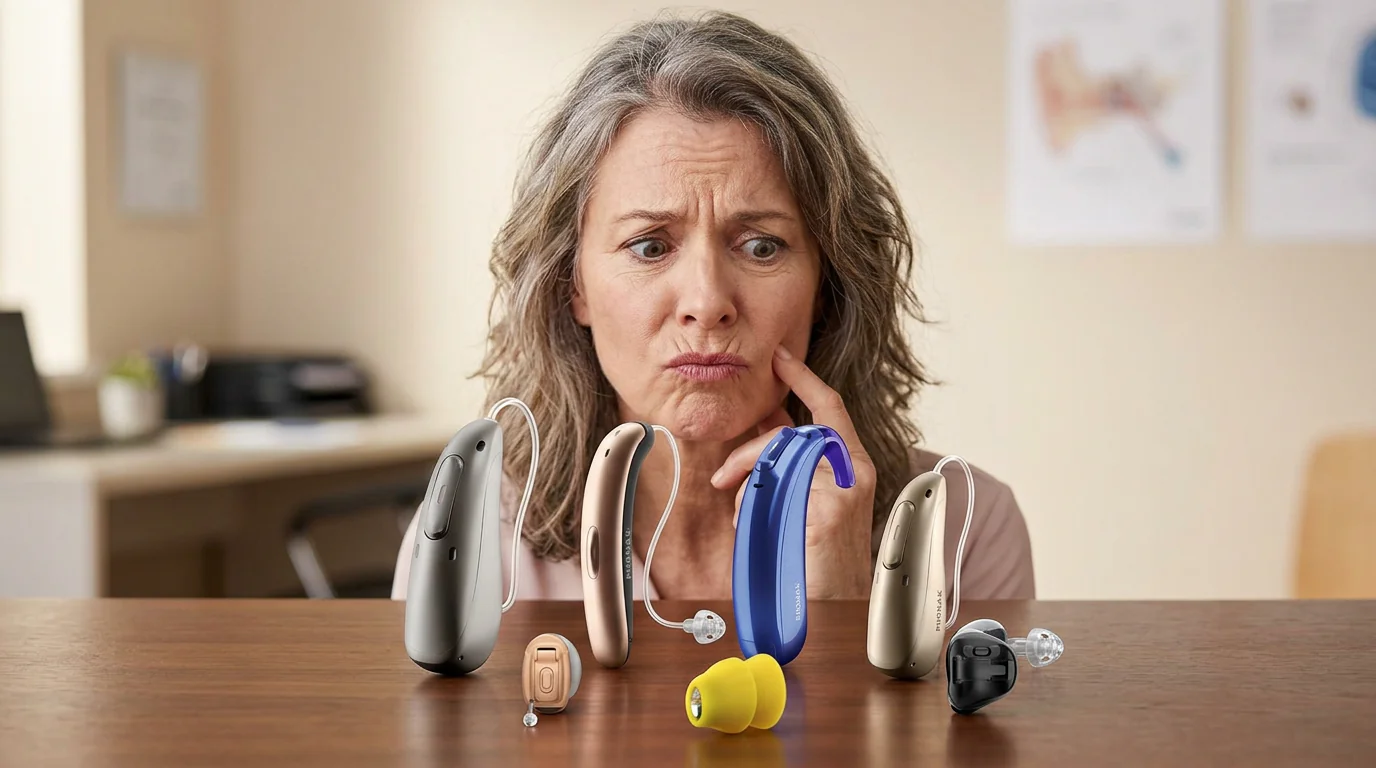
Hearing aids come in several physical forms, broadly split between devices that sit behind the ear and custom-moulded options that sit entirely inside the ear.
Behind-the-Ear Options
Behind-The-Ear (BTE): This traditional, slightly larger style houses the electronics in a casing behind the outer ear, connecting to a custom earmold inside the canal. BTE devices offer maximum power, making them the top choice for severe-to-profound hearing loss, and their size makes them very easy to handle.
Receiver-In-The-Canal (RIC): Currently the most popular style globally. The tiny casing sits behind the ear and is connected by an incredibly thin, nearly invisible wire to a speaker placed directly inside the ear canal. RICs provide a highly natural sound, accommodate advanced features, and work beautifully for mild-to-severe hearing loss.
Custom-Moulded Hearing Aid Solutions
These styles are custom-moulded to match the exact contours of your unique ear shape.
In-The-Ear (ITE): Fits into the outer bowl of the ear. While they are visible, their larger size allows for easy-to-use manual controls and dual microphones.
In-The-Canal (ITC): Fits partly in the ear canal and partly in the outer ear. This offers a more discreet profile while still leaving enough room for manual adjustments.
Completely-In-Canal (CIC): Sits deeply inside the ear canal so that only a tiny plastic removal handle is visible. They offer excellent cosmetic appeal and naturally reduce wind noise, though they lack the space for larger features.
Technology Levels and Key Features
Hearing aid technology is generally divided into four tiers to match different lifestyle needs. As you move up the tiers, the devices offer more customisable acoustic bands and smarter automation.
Essential / Basic: Perfect for quiet, one-on-one conversations or watching television at home. Features are mostly automated with fewer frequency bands for fine-tuning.
Standard / Mid-Range: Ideal for calm environments and occasional social outings, offering moderate background noise reduction and basic feedback suppression.
Advanced: Highly recommended for active social lives, restaurants, and outdoor activities. These provide robust noise management and directional microphones to separate speech from background chatter.
Premium: Built for challenging, highly dynamic environments. They utilise powerful Artificial Intelligence (AI) and machine learning to instantly adapt to shifting background noise and preserve natural soundscapes.
Modern Features to Look For
Directional Microphones: Focuses on the voice directly in front of you while actively suppressing distracting sounds from the sides or behind.
Dynamic Noise Management: Differentiates between background distractions like wind or traffic and human speech, lowering the noise to improve clarity.
Feedback Cancellation: Instantly stops the high-pitched whistling or squealing that occurs when objects get too close to the device.
Bluetooth Streaming & Apps: Allows your hearing aids to function like wireless headphones, syncing with smartphones and computers for clear calls and media. Companion apps let you utilise your phone as a remote control to adjust volume or switch listening programmes.
Tinnitus Masking: Built-in sound therapy functions that emit soft masking sounds to help relieve ear ringing.
When evaluating these features, exploring high-quality hearing aid solutions can help ensure you select the exact processing power needed for your daily routine.
Rechargeability vs. Disposable Batteries: Which is Best?
Choosing how your device is powered plays a huge role in your daily satisfaction.
Rechargeable Hearing Aids
Modern rechargeables utilise built-in lithium-ion batteries and have quickly become the industry standard.
The Perks: A simple 3-hour charge provides 24 to 30 hours of use, even with heavy Bluetooth streaming. A quick 15-minute top-up can grant an extra 3 hours of power. They are fantastic for anyone with limited dexterity or vision since you never have to fiddle with tiny batteries. Because they lack a battery door, they also offer superior protection against dust and moisture.
The Drawbacks: They come with a higher upfront cost. If you forget to charge them, you cannot simply swap in a new battery on the go. The internal batteries will also require replacement at a clinic after 3 to 5 years.
Non-Rechargeable Hearing Aids
These devices rely on traditional, disposable zinc-air button batteries.
The Perks: They require a lower initial investment. If the battery dies, you simply pop a fresh one in and you are instantly ready to go. This makes them highly reliable for frequent travellers, campers, or those visiting remote areas without electricity.
The Drawbacks: The cost of buying replacement batteries adds up over time. Depending on the size, batteries last between 3 and 22 days, and handling these tiny cells can be incredibly frustrating for individuals with arthritis or neuropathy.
The Verdict: While rechargeables are the most user-friendly choice for the majority of lifestyles, disposables remain a practical backup for outdoor adventurers. Keep in mind that if you prefer ultra-small, invisible styles, you will likely need to choose disposable batteries due to space constraints. Finding the proper power configuration is an essential part of implementing long-term hearing aid solutions.
Understanding Degrees of Hearing Loss
The severity of hearing impairment is determined by the quietest volume of sound you can detect, measured in decibels (dB). These thresholds are categorised as follows:
Normal Hearing (-10 to 25 dB): Healthy hearing across all environments.
Mild Hearing Loss (26 to 40 dB): Difficulty hearing soft whispers or following conversations in noisy rooms.
Moderate Hearing Loss (41 to 70 dB): Speech must be raised to be understood; frequently asking others to repeat themselves.
Severe Hearing Loss (71 to 90 dB): Trouble following any conversation without amplification; only loud sounds are audible.
Profound Hearing Loss (91+ dB): Unable to hear normal speech at all; heavily reliant on hearing aids or cochlear implants.
To discover your exact numbers, a hearing professional will map your hearing ability across various pitches using a graph called an audiogram.
Matching Your Lifestyle to the Right Hearing Aid Solutions
While your audiogram dictates how much amplification you need, your daily routine determines the ideal style and technology level.
Social & Noisy Routines: If you love dinner parties, busy restaurants, or group meetings, you will want an Advanced or Premium tier device equipped with directional microphones and premium noise reduction.
Active & Outdoor Lifestyles: For hikers, runners, and outdoor enthusiasts, prioritising a high moisture protection rating (IP-rating) and specialised wind noise reduction is key.
Busy Professionals: If you are constantly on Zoom calls, streaming media, or answering your phone, Bluetooth connectivity and a rechargeable battery will keep you moving seamlessly through your work week.
Home-Centric Lifestyles: If your days are mostly calm and focused on one-on-one conversations or watching TV, an Essential or Standard model will provide excellent support without the added expense of premium extras.
Your physical comfort matters just as much as your habits. RIC and BTE styles are exceptionally comfortable and adapt well to tech features. However, if you frequently wear eyeglasses or face masks, a custom-moulded option like an ITE or ITC keeps the space behind your ear completely clear. Investing in the right lifestyle fit ensures you get the most out of your modern hearing aid solutions.
Why You Can Trust Modern Hearing Aids
Investing in your hearing is an investment in your overall well-being. Clinical research consistently shows that addressing hearing difficulties brings profound health benefits:
Preservation of Brain Function: Leaving hearing loss untreated can cause the auditory processing areas of the brain to weaken from lack of use. Hearing aids keep these neural pathways active, which supports memory, sharpens focus, and helps reduce cognitive decline.
Clinically Proven Efficacy: Digital hearing aids are regulated medical devices. By accurately stimulating the surviving hair cells in your inner ear, they protect your ability to understand speech clearly over the long term.
Enhanced Social Connection & Mental Health: Reducing the sheer exhaustion of straining to hear allows you to stay engaged with family and friends. Studies have directly linked regular hearing aid use to lower rates of depression and isolation.
Effective Tinnitus Relief: For most people dealing with bothersome ringing in the ears, a professionally fitted hearing aid provides immediate relief by gently masking the internal noise with ambient sound.
Take the Next Step Toward Better Hearing
Ready to find the perfect technology for your lifestyle? Don't let hearing difficulties hold you back from fully enjoying life's moments. Get a professional, precise evaluation from the experts who care.
The dedicated team at JJC Kruger Hearing Centre focuses on improving your quality of life through comprehensive evaluations and customised hearing aid solutions. With multi-location clinics across Gauteng, we treat both simple and complex cases with precision and care.
Book your comprehensive diagnostic evaluation today and let us help you rediscover the joy of clear sound.